We need very small white rangoli designs for our
daily vasal kolam. I would like to reiterate that time and space are constraints at present.
However, to follow to tradition of decorating the entrance with small and simple kolam we need some ideas.
Rangoli tips - Symmetry is very important for the beauty of rangoli, but when we draw with rangoli powder with our fingers
it is possible that there may be imperfections here and there. We should concentrate on the overall symmetry and should not compare individual elements.
For example, in the muggulu designs shared here there may be slight differences in the lengths of the arms, sizes of the patterns.
That is our limitation and constraints we humans have.
Kolam tips - The floor is the "canvas" on which we "paint" the kolam. So, we have to prepare it (the floor) first. When we were young, we drew on the courtyard.
Preparation of the floor including sweeping the ground to remove the kolam of the previous day and also levelling the ground to remove any minor undulations that may have formed due to dust, other unwanted particles, waste material.
Dried leaves etc on the ground also had to be removed.
Then we sprinkled water to improve bonding of the floor. If the contrast was not sufficient, we added cow dung to water.
This gave a greenish yellow or yellowish green colour on which the white kolam is clearly visible.
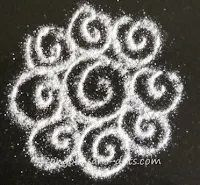 |
| Small rangoli kolam easy |
These designs can be used as small without chukki rangoli can be used as base to expand further, whenever possible. Spirals should be drawn without any joints. For this draw them with confidence at one stretch. The close-up image of the rangoli powder is beautiful and natural
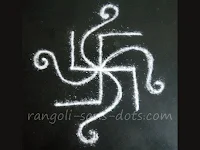 |
| Small rangoli very easy |
That is one some days we can use them as completed kolam and on other days when we have spare time during weekends. We can try something different or unique.
Nowadays we have floors with ceramic tiles and in the case of old flats mosaic tiles. Sometimes it may be difficult to draw a visible design on these surfaces. So we may prepare the floor by using contrasting colours of rangoli or by having tiles giving dark background. With lots of apartment complexes coming up, even porches have become a rarity.
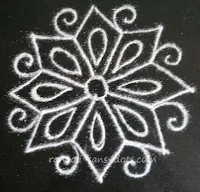 |
| Very small rangoli designs for home |
Sometimes when we let our imagination takes flight, we ourselves may be surprised with the result. In the rangoli below draw the eight petals and then connect the edges to form a circle if you are drawing the circle without any tools.
 |
| very very small rangoli simple and beautiful for kids, maybe we can try |
All pictures above show what can be the centre of bigger designs. Free hand rangoli can expand radially and hence only sky or rather space available (pun unintended :) is the limit. Sharing small rangoli videos on YouTube is quite easy. The problem comes when I share bigger rangoli particular the knotted designs (they can be challenging). Some of them think I am fast, and few others think I am too slow while others are okay with the speed. I still have not found a solution for this problem. Occasionally I share a design first in normal speed and then in slow motion. The advent of shorts and reels has revolutionised the concept of audience retention and may have solved by problem to some extent. A 30 second video may have a retention of less than 10 seconds. So, I try to factor this and produce videos accordingly.


Comments