Wet Arisi maavu kolam or alpona borders
Rangoli has synonyms in the art forms arisi maavu kolam (rangoli made with rice flour paste) and Alpona. Both are somewhat similar.
Alpona for beginners
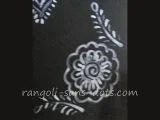 |
| Alpona rangoli design beautiful and simple |
It can be drawn with dry or wet rice flour.
However I discuss here wet rice flour rangoli since the technique is similar to that of traditional alpona
(I understand it is also drawn with rice flour paste)
The thickness/consistency of the rice flour paste varies according to rangoli making method adopted. We can use fingers, or a cloth dipped in rice flour paste to draw the kolam.
At present ready-made sticks are available. All designs here have been taken when the flour is wet.
The rangoli becomes bright when the flour dries.
We can also grind rice flour paste in a mixer, make the paste in various shapes and dry them. The dried rice flour cakes are used to make rangoli.
The lines are drawn after dipping them in water to liquefy them again.
Alpona design simple
 |
| rangoli alpona design simple easy |
Both alpona and arisi maavu kolam are left white without filling up with colours.
Here I would like to follow the traditional method of drawing using fingers only.
I understand that alpona design for door, stairs, alpona border designs are common. Alpona art is common in West Bengal.
I have shared a wet rice flour rangoli below considered to be auspicious and drawn in Pooja room in South India.
It can be drawn as alpona for Laxmi Puja.
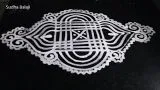 |
| Traditional kolam with wet rice flour |
A rose by any other name smells as sweet. Similarly, rangoli art has different names in different parts of our country. However, the beauty is the same. Fortunately, we have continuity in culture, traditions and festivals in our country be it in any state or any part of Bharat, East, West, North or South. So, the same art with variations depending upon local conditions, ingenuity and imagination is practised with another name just as we have Hindustani and Carnatic music in kolam art too we have different names in different places. All these schools of rangoli art have the same theme, they are a visual treat to see, last for a while, a medium to express happiness, to meditate and to look inward.


Comments