The dot grid is placed vertically. It also comes under the category of sangu kolam or star kolams. In case you have missed it in the title the dot pattern is 13 by 7 Rangoli tip: If you see the second image you will notice that I have joined all the dots with a single straight line with no joints. If we practice thus, the kolam looks more beautiful. I have not added colours but patterns with white kola podi. We can try will colours too for Margali or New Year
For those visiting this blog for the first time, I have rangoli videos channels on Facebook, YouTube and Instagram.
Using the search terms "Sudha Balaji rangoli " or "Rangoli sans dots " should give relevant results on search engines.
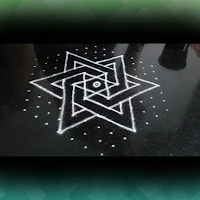
Be it freehand designs or pulli kolam art, star-based patterns are quite popular. The first pic shows how to connect the dots after drawing the star template. This is an important concept of the rangoli.
From the star usually the lines are drawn connecting the dots on the right side, I tried a unique kolam type by drawing them on the left side. I have justified the reason at the end of this post.
 |
| 13 to 7 dots muggulu white rangoli design |
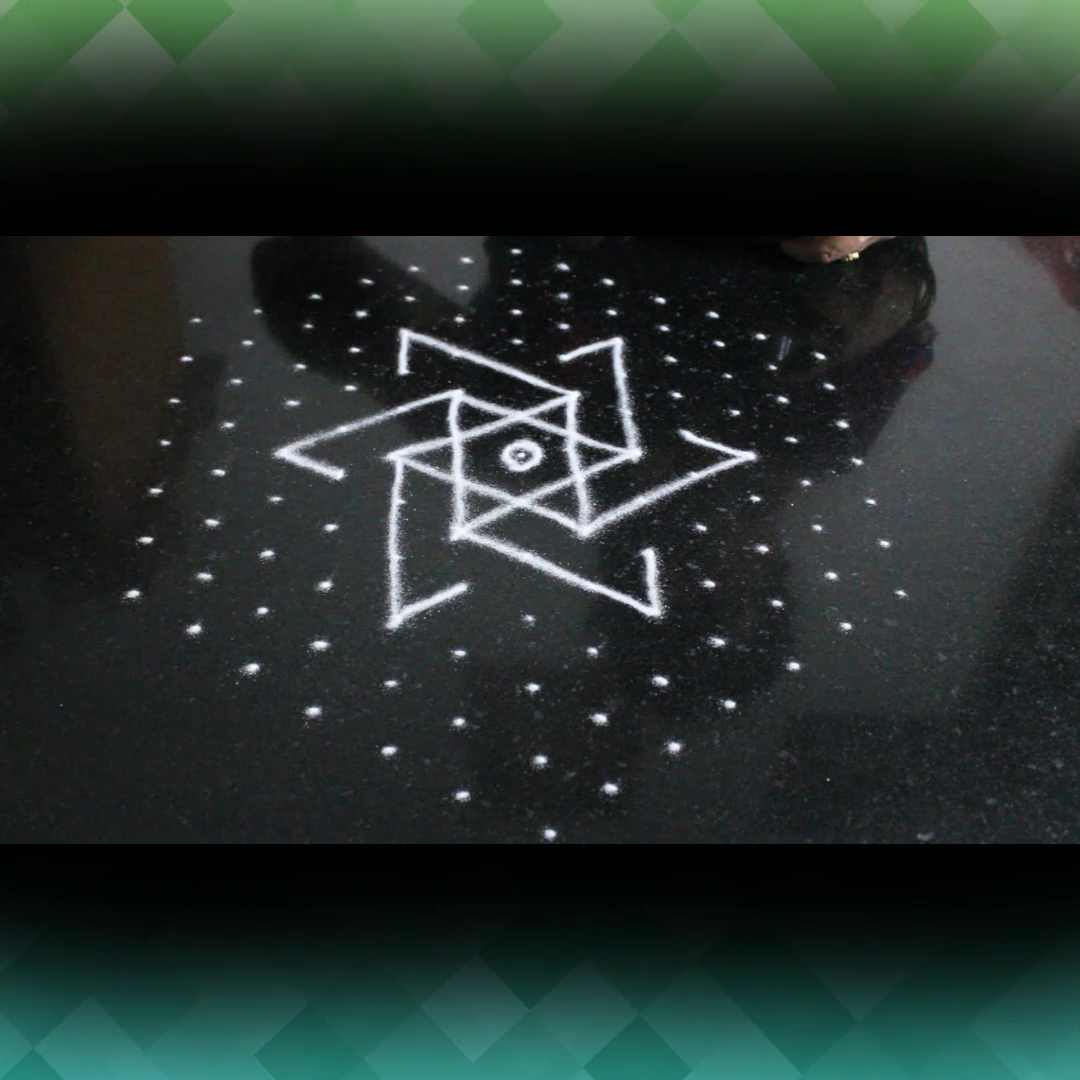
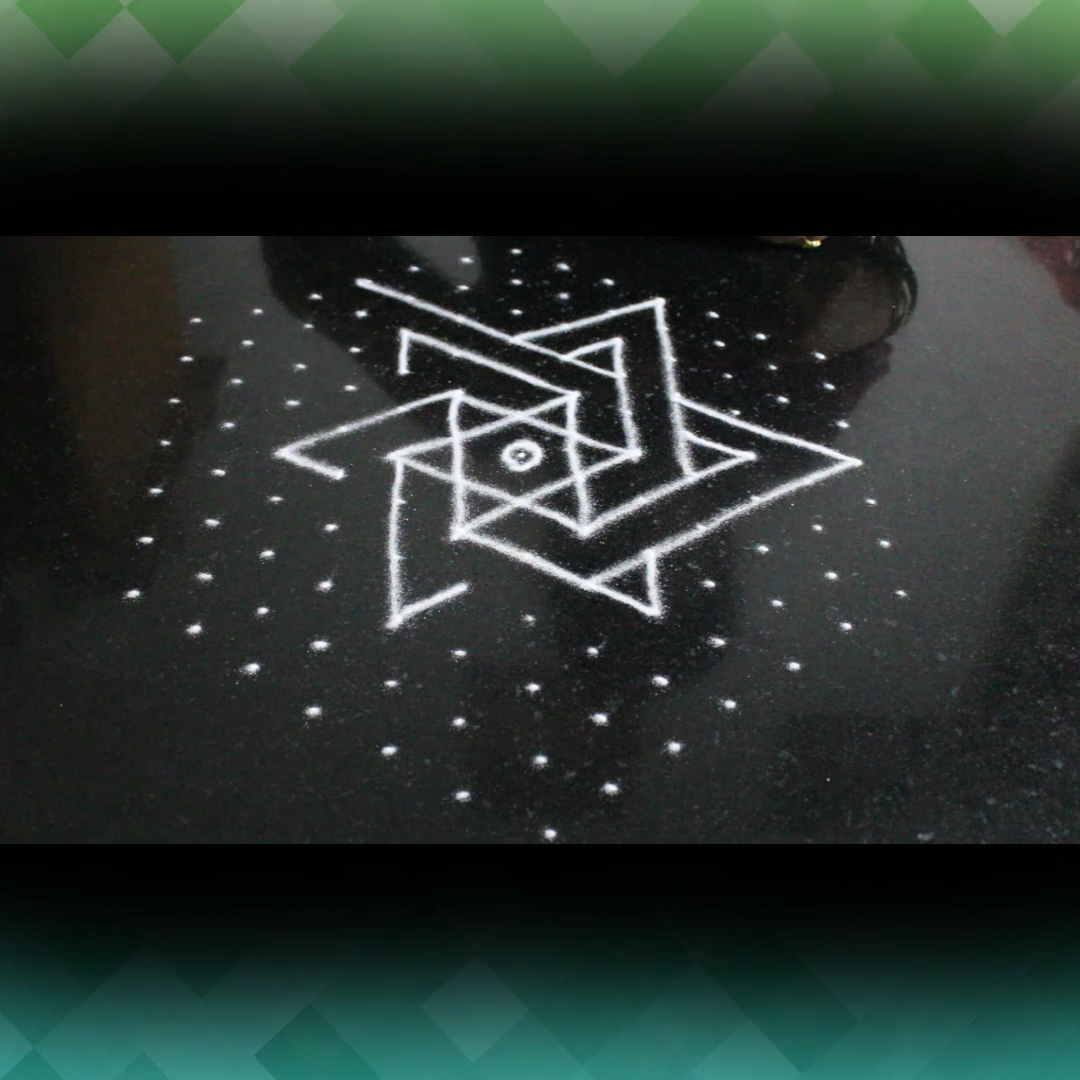
Step by step pictures for this chukki rangoli 13 by 7. The next image shows the most important aspect to get this pulli kolam simple and beautiful, right. The lines should appear as if they pass under each other so as to get a three-dimensional effect, so to say. Lines should pass under each other. If we concentrate and draw it the first time, we do not have to draw the complete lines and then erase the part where they pass over the other pair of straight lines. This will result in smudges on a beautiful kolam with dots.
 |
| 13 to 7 chukkala muggulu step by step |
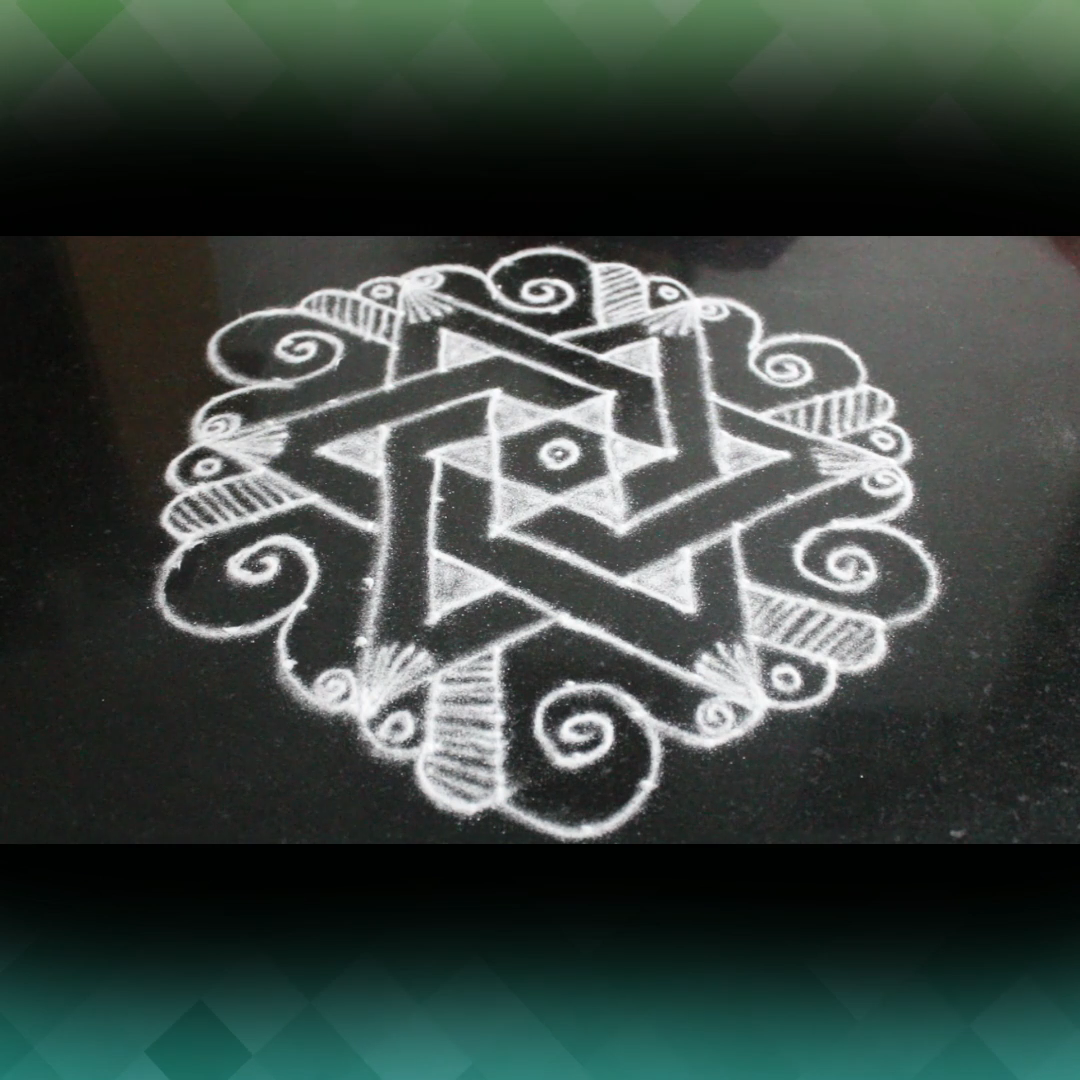
Once you draw the star pattern - connecting the dots to form this design is a little tricky. That is why I have shown 3 steps. When done with perfection the result is as shown in the rangoli photo below. Observe how the pairs of lines travel below the other related pair.
 |
| 13 to 7 chukki rangoli |
White rangoli has been shown. We can add colours if required. We can draw white kolam occasionally for Margazhi too. Check the background i.e. the colour of the floor before you decide
 |
| 13 to 7 pulli kolam with dots |
While drawing the central star pattern is relatively easy, for the next step as shown in the third image acceptable degree of perfection can be achieved only if the dot grid is placed with even spaces among the dots and if the lines are drawn through the dots at a single stretch.
Once this is achieved the remaining dots are 3,2,1 dot grid that can be used for making any pattern. The conch design being the most common.
As discussed earlier, I have tried an anticlockwise version of this common pulli kolam design with vellai kolamaavu. There was at least one comment where a lady had objected to my use of counterclockwise method of drawing. I do both clockwise and counterclockwise patterns. My side of the argument is that I take refuge in Swami Vivekananda's statement. He asked to avoid dogmas (internet gives the meaning for this word as a set of principles or statements considered to be authoritative or accepted uncritically) for the nation to advance. Looks like I have used the right term in the context. Let me hasten to add that there are three sides to an argument, your side, my side and the correct side.

Comments