Simple rangoli motifs or patterns
A collection of easy motifs that can be used in rangoli or kolam .
The first image shows the patterns I regularly use in the free hand kolam I draw and share. It is not a comprehensive collection.
Spirals, paisleys, floral petals of various shapes, leaves, tendrils, flower designs, birds, dots, small lines are some of the common patterns.
I have shown the close up of some the motifs used in the other images shared in this post. In free hand rangoli we have patterns drawn
invariably on the periphery of the rangoli. At the centre we can use the flower designs. Congruity in selection comes with experience.
Floral petals can be with one, two or three lobes. We can also have clover shaped patterns. The options are infinite.
One pic shows how to draw bird motifs with single line and 2-line technique. We can represent complicated ideas through simple patterns.
The feet of Lord Krishna or Goddess Lakshmi are drawn in rangoli kolam. One of the easiest ways to depict the Feet of God is shown in one image.
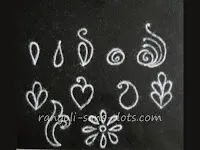 |
| what are the motifs used in kolam |
Some of the traditional motifs rangoli, shared here have been taken from completed kolam after cropping
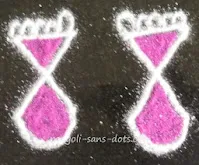 |
| God Feet motif |
Drawing floral patterns in kolam
It is possible to draw floral patterns with four, eight, sixteen and thirty-two petals. More the petals denser the petals appear. Of course, more than thirty-two may make the design congested.
Draw a small circle and around the circle draw four petals at right angles to each other. Add four more petals in the gaps to get eight. Now add petals between any two of the eight petals drawn earlier to get sixteen petals.
Kolam motifs are originally used on floor as a canvas to create simple to complicated designs.
However, over a period of time, kolam motifs are whole designs are used on textiles particularly sarees on the walls of hotels, building particularly in the reception area.
They are also used on bags, mugs etc given as gifts or mementos.
When I participated in a program conducted by YouTube called Tamil Day (it was in Chennai) all the souvenirs had kolam patterns printed on them. I was the only YouTuber from rangoli genre. It made me feel happy that the art got recognition and was accorded importance above other genres.
While the old form of displaying rangoli art on the floor continues as kolam art in southern part of India the art is getting publicity through commercialisation by printing it on various gift articles.
Art evolves with times and it is welcome that it is being used in articles used by the modern generations of the 90s and early 2000s making them aware of this awesome art, I am sceptical about the use of auspicious rangoli designs like Aishwarya kolam, Hridaya kamalam on any articles.
Being the old traditionalist that I am, I prefer to draw them only in the Pooja room. However, promotion of this art as decor for wall, blouses, sarees may have a positive spin off and evince an interest in the youngsters to know more about it and probably learn it as well.


Comments